Cardiology fellowship clinical rotations vs research tracks
A cardiology fellowship can be three years on paper and still produce very different careers.
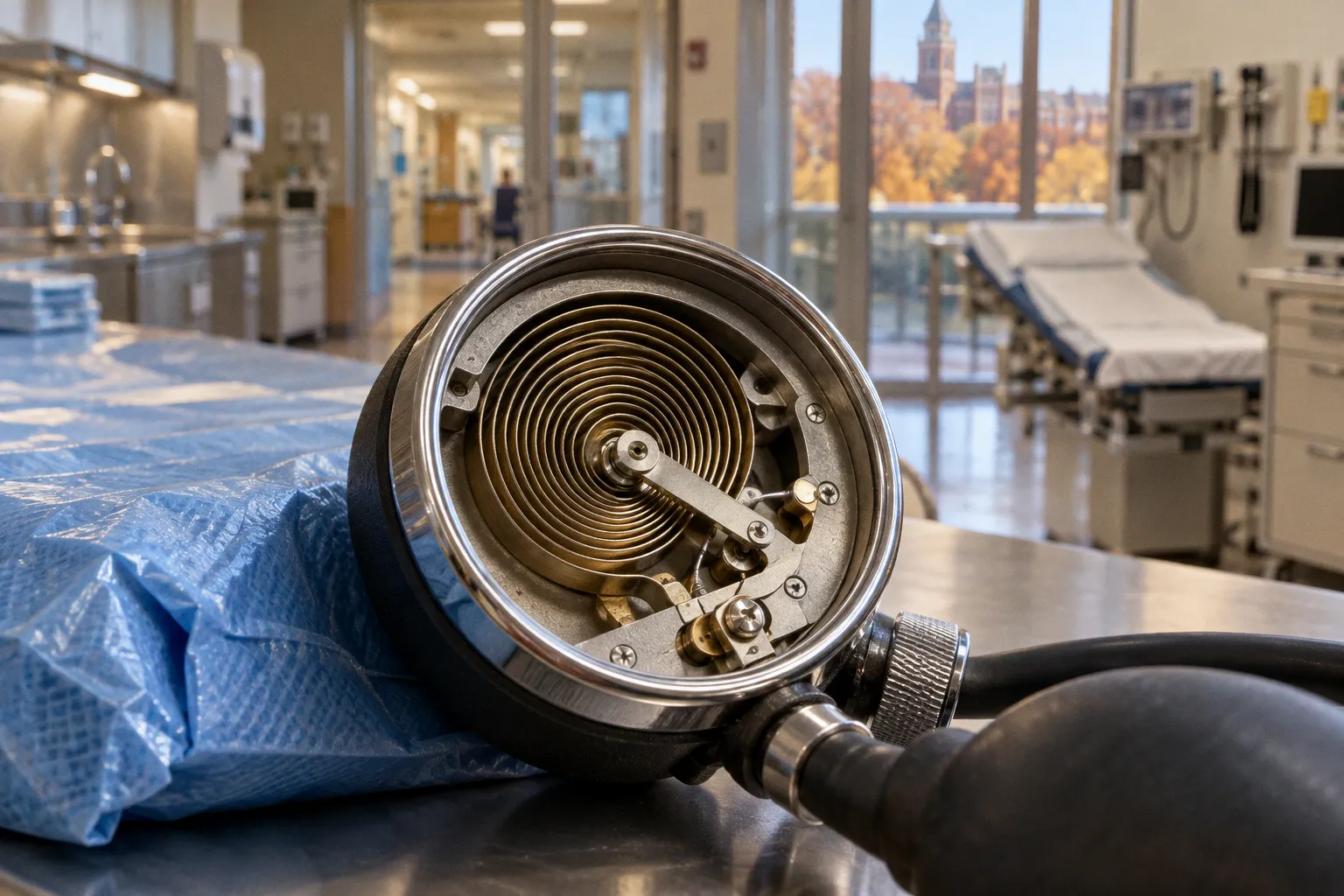
One fellow spends most of that time building clinical judgment across inpatient and outpatient services; another follows a longer physician-scientist pathway with protected research time. Both must meet core clinical requirements. The difference lies in what the program adds, how it protects that time, and what it expects the fellow to become.
That distinction is easy to blur during recruitment. A program may advertise a research track, a clinician-educator pathway, or a rich academic environment; these labels say little by themselves about the actual schedule. If you are trying to work out how to check cardiology fellowship clinical rotations versus research tracks, start with the months, the required competencies, and the way protected time works in practice. The brochure is not the curriculum.
The 24-month clinical baseline
A standard three-year cardiovascular disease fellowship lasts 36 months. ACGME requirements include at least 24 months of clinical experience and at least six months devoted to research or scholarly activity. That gives a useful starting point for comparing programs, but it does not tell you how those months are arranged.
The clinical minimum is a floor, not a complete description of training. A fellow still needs experience in the core work of cardiology: recognizing and managing cardiovascular disease, assessing patients in different clinical settings, interpreting diagnostic studies, and developing procedural competence. The required experience is spread across rotations and clinical responsibilities, with the exact internal schedule varying by institution.
That variation matters. A program might cluster clinical rotations early, creating a more concentrated research period later. Another may interleave clinical and scholarly work. Neither structure is automatically superior. Concentrated time can make a project easier to pursue; interleaving can keep clinical practice continuously active. The question is whether the schedule supports the fellow’s learning and the program’s stated goals, rather than merely fitting the language of a track.
There is also a familiar training paradox: the more a program emphasizes research, the more carefully a trainee should examine its clinical scaffolding. Research time does not cancel the clinical requirements. A physician-scientist track still needs to preserve the minimum clinical experience, and a fellow should be able to see where that experience sits in the calendar.
A useful first comparison is simple:
| Feature | Standard clinical track | Research or physician-scientist track |
|---|---|---|
| Typical duration | Three years | Often four to five years |
| Clinical foundation | At least 24 months in a standard three-year fellowship | Core clinical requirements remain; training is extended to allow deeper research preparation |
| Research or scholarly activity | At least six months required within the standard curriculum | More sustained research time, often with a defined academic pathway |
| Main planning question | Does the rotation sequence build the clinical capabilities you want? | Is research time genuinely protected, mentored, and compatible with clinical competency? |
| Likely career orientation | Broad clinical practice, with possible academic work | Physician-scientist or research-intensive academic career |
The table is a map, not a ranking. A longer track buys time only if the time has structure: a mentor, a feasible question, access to methods and data, and a plan for maintaining clinical development. Without those, extra years can become an expensive way to postpone choosing a direction.
What a research track actually changes
Research tracks are often associated with NIH T32 support or physician-scientist pathways. At many institutions, these extend fellowship to four or five years. The additional time is intended to provide deeper research training, rather than simply expanding the standard fellowship calendar.
That distinction deserves scrutiny. What does the fellow do during the added period? Is there a defined transition from clinical training to research, or is the fellow expected to assemble a project while carrying substantial clinical duties? Who supervises the work? How is progress reviewed? These are not administrative details. They determine whether protected time is a meaningful educational resource or a phrase that survives only in recruitment materials.
The label “protected” also needs a practical definition. Ask how clinical coverage is handled when research time is scheduled, what happens when service needs increase, and whether research time is routinely interrupted. A program may not promise a perfectly insulated calendar; clinical medicine rarely cooperates with idealized timetables. But the program should be able to explain how it protects the purpose of the research block when disruptions occur.
Mentorship is another difference between a track and a collection of open afternoons. A strong pathway helps a fellow identify a suitable question, find appropriate mentorship, learn the relevant methods, and understand how the work fits a longer career. A publication quota is not a reliable proxy for this. Programs differ in expectations, and the existence of a research track does not establish a universal manuscript requirement.
A research track earns its extra years by creating usable research time, not by putting “scholarly” on the schedule.
For applicants who are still deciding between clinical and research careers, uncertainty is not a disqualifying condition. It is, however, a reason to ask about flexibility. Can a fellow explore a project before committing to a longer pathway? Can the program support a transition into a research-intensive track, or does that decision need to be made at entry? The answers reveal how the institution treats development: as a fixed pipeline or as a process that can respond to a trainee’s interests and performance.
Procedural thresholds and the COCATS framework
Clinical training is not assessed only by months spent on service. ACGME procedural experience targets include minimum thresholds such as performing 75 echocardiograms and interpreting 150, completing 100 diagnostic cardiac catheterizations, interpreting 100 radionuclide studies, performing 50 exercise stress ECG tests, and interpreting 3,500 ECGs.
These figures are useful when comparing curricula, but they should not be mistaken for proof of independent competence. A log can show that a fellow encountered a defined number of studies or procedures. It cannot, on its own, establish the quality of supervision, the range of case complexity, or the fellow’s ability to make sound decisions when a case falls outside the familiar pattern.
The ACC COCATS framework offers another way to understand the curriculum. Level I describes core basic competence expected of all fellows. Level II refers to advanced elective capability in particular diagnostic or therapeutic areas. The distinction helps separate the broad preparation expected in general cardiovascular disease training from deeper development in a selected modality.
For applicants, the practical question is how a program connects its rotations and case volume to those expectations. Ask how fellows gain exposure, how progress is assessed, and how the program responds when a fellow is behind in a particular area. A list of targets tells you what the program tracks; it does not tell you how the program teaches.
This is where research-heavy pathways need especially clear planning. If a fellow spends a substantial block away from clinical duties, the program should be able to show how core experience is completed without compressing it into a rushed sequence. Conversely, a clinically intensive program should explain how research or scholarly activity is organized, rather than treating the required minimum as a box to tick.
Clinical exposure also has a quality dimension that simple totals miss. A fellow may meet a threshold through many similar cases or through a broader mix of presentations. The count matters, but context matters too: the range of disease, the fellow’s role, the feedback received, and the degree of responsibility gained over time. Ask for the curriculum and evaluation process, then ask how they work together.
Comparing the institutional models
Programs may offer a standard three-year clinical track, a four-year clinician-educator pathway, or a four- to five-year physician-scientist or NIH T32-funded track. These are common models, not universal templates. Rotation distribution and internal block structure vary by institution, so a title alone cannot tell you what your working weeks will look like.
A clinician-educator pathway deserves its own questions. It may suit a fellow interested in teaching, curriculum development, or academic clinical work, but the label does not specify how much protected educational time exists or what preparation is provided. Ask what responsibilities fellows take on, how teaching is supervised, and how those activities fit around clinical training. “Academic” is a broad word; the calendar is more revealing.
For any track, request a sample schedule and examine it month by month. Look for the clinical rotations, research or scholarly blocks, elective periods, and any stated longitudinal commitments. Then ask what changes between the sample schedule and the schedule fellows actually experience. Service demands, faculty availability, and project timelines can all shape the practical version.
A focused comparison should include these questions:
- Where do the clinical months sit? The program should be able to explain the sequence and how it supports progressive clinical responsibility.
- How is research time protected? Ask who covers clinical duties and what happens when the service is under pressure.
- What does mentorship look like? Find out how fellows are matched with mentors and how often progress is reviewed.
- How are competencies assessed? Case and procedure totals need to connect to observation, feedback, and remediation when necessary.
- What does the added year provide? A longer pathway should offer identifiable research or educational development, not merely a delayed endpoint.
- How much flexibility is available? Ask whether fellows can revise a track as their interests become clearer, and what consequences that has for duration.
These questions are more useful than asking which track is “better.” Better for what? A trainee aiming for broad clinical practice may value a well-sequenced three-year curriculum with strong procedural and diagnostic exposure. Someone pursuing a research-intensive academic career may need protected time and methodological mentorship that a standard track cannot offer in the same depth. A future clinician-educator may need opportunities to teach and learn how to evaluate educational work. The correct comparison begins with the work you intend to do after fellowship.
Match the training structure to the career
Career planning should account for more than the first job after graduation. Research careers require continuity: a question worth pursuing, suitable mentorship, methods training, and a realistic path to continue the work after fellowship. A track that offers time without helping fellows build that continuity may look attractive in an application packet and prove thin in practice.
Clinical careers also require deliberate preparation. A standard track is not automatically “more practical” simply because it is shorter. Its value depends on the breadth and quality of the rotations, how responsibility develops, and whether fellows receive enough feedback to recognize gaps before training ends. The same caution applies to research tracks: a longer duration is not evidence of better preparation unless the structure makes the additional time productive.
Applicants can make the comparison concrete by writing down their intended next step and testing each program against it. If the goal is clinical practice, ask whether the curriculum provides the mix of clinical experience needed for that role and how the program supports competence across core areas. If the goal is a physician-scientist career, ask how research time, mentorship, and clinical training fit together across the full four- or five-year pathway. If the goal remains unsettled, ask how easily a fellow can explore options without losing essential training time.
There is no universal schedule that solves these questions. ACGME requirements establish a baseline, while COCATS helps describe levels of clinical training. The institution supplies the actual rotations, mentoring arrangements, and flexibility. Fellowship applicants have to examine all three layers rather than treating one as a substitute for the others.
The most revealing program conversation is usually not about the prestige of a track. It is about what a fellow does on an ordinary month, what happens when the plan meets clinical reality, and how the program knows the trainee is progressing. When you compare clinical rotations with a research pathway, are you evaluating the label—or the training your future practice will actually require?